

Preparing for your first professional talk isn’t about polishing your image. It’s about letting go of it. And I didn’t know that at first. Most first-time speakers treat the talk like a portfolio. Like you have to prove you deserve to be on that stage. And I did that. But I learned that great talk is not about impressing people, but more about giving them something they can actually use.
So here’s the thing. I had spoken before. Like, in my local church organization, I’d stand in front of people and share stuff. A friend also once invited me to speak at their co-working space to maybe about 10 people, half of whom I personally knew. So when this email came in from a university asking me to speak to their Multimedia students, I was like, “Yeah, I can do this.” I said yes immediately.
But then I realized this was different.
Because in those other settings, people already kind of knew me. Or they knew the person who invited me, so there was this built-in trust. But this was a room full of strangers who had no reason to care who I was.
And I had no idea what I was going to say. And looking back, I made some valuable mistakes during my preparation.
Trying to Sound Impressive
My first instinct was to find an old script from the video content I produce on my YouTube channel, and start making a deck out of it. And the whole time, in the back of my head, I kept thinking: What would make me sound cool? What would make them think, “Wow, this person knows what he’s talking about?”
I was basically trying to audition for their approval.
The event coordinator had told me early on that these were beginner students. Like, first and second years who were still figuring out what they even wanted to do. But I wasn’t really hearing that information. I was too busy curating my own image.
It took me some time to process what she said and find the courage to start over again. I sat with this question for a day:
If I were them, what would I actually need to hear?
Memorizing Instead of Understanding
I generally don’t like memorizing things. It makes me forget the whole context. But I am also easily swayed off-topic because I always want to expand on what I’m saying. And because I didn’t want to mess up this opportunity, I decided to memorize my presentation.
Every transition. Every pause. Every little joke. I wrote it all into the speaker notes.
I practiced it for days in front of my wife and even recorded myself. And I got pretty confident with how well I had memorized my presentation.
But then I realized:
What if they ask a question I haven’t prepared for?
Because here’s the thing about memorization: it’s fragile. One interruption and the whole thing falls apart. I realized I didn’t actually understand my material, I just knew the order of the words.
And so, I stopped practicing the script and started practicing the ideas. I’d record myself explaining each section to no one, just talking it through. Then I’d listen back. Where did I stumble? Where did I sound like I was reading? Where did I get out of topic?
Eventually, I didn’t have the talk memorized anymore. I understood it deeply enough that the words could just find themselves.
What They Actually Needed to Hear
At first, I thought about creating a topic that revolved around art foundations, but I realized they’ve likely already discussed that in class or watched hundreds of YouTube videos on that same subject. I didn’t think they needed another technical lecture. I felt they needed something beyond that. Something to help them navigate the emotional ups and downs of being a creative.
So, I titled my talk “Why Some Artists Succeed and Why Others Don’t,” but the core message was actually about defining success for yourself. It was about not letting social media dictate what “winning” looks like, and not measuring yourself against people who had a head start or different advantages. It was about sitting with one difficult question:
What does success actually mean to me?
I believe this is exactly what my audience needed to hear. These students are at the very beginning of their creative journeys. They haven’t yet faced the reality of being a creator in the age of generative AI, where anyone can produce work faster and cheaper. They haven’t felt the burnout of losing your drive because your work isn’t being noticed, or the uncertainty of not being paid enough for something you poured your heart and soul into.
I’ve experienced those struggles firsthand. But I realized that the only way to persevere as a creative is to stop letting the world define your wins. Once I defined what success looked like for me, I found the reason to keep going. That’s the clarity I wish I’d had when I was in their shoes.
It Was Never About Me
The talk went well. I handled the questions related to my topic, and even navigated a few that were completely off-track. Afterward, the event coordinator came up to me and said something I wasn’t expecting:
“The students were really inspired by your talk.”
She told me they asked more questions after I finished than they ever had for any other speaker. They didn’t just leave; they stayed. They wanted to keep talking and sharing their own experiences as creatives.
I don’t say this to brag. I say it because I almost blew it. I almost showed up with a talk that was all about me. It was only because I finally understood what they needed that the talk became something useful.

The students asked questions after the talk.
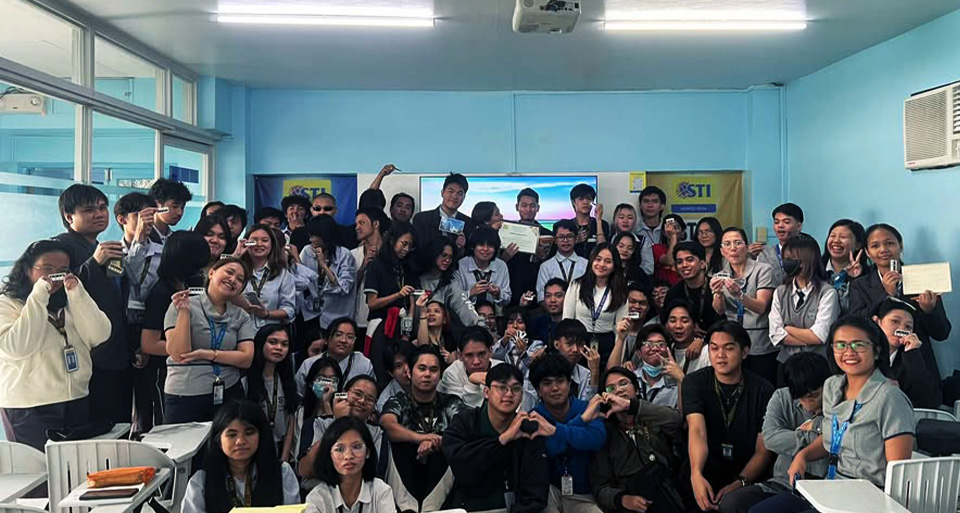
Ended the session with a group photo featuring all the student participants and their professors.
Want to go deeper?
If you’re organizing a creative event and you want a talk that goes beyond inspiration and actually engage in meaningful conversation, then let’s collaborate.